Forex trading mistakes beginners make
Currency markets attract retail traders for a reason. They run nearly twenty-four hours a day, the entry costs are low, and the leverage on offer makes small accounts feel meaningful. The Bank for International Settlements pegs daily forex turnover at over seven trillion dollars, a figure that has grown steadily across recent triennial surveys. Most of that volume is institutional. Retail participation, while smaller in absolute terms, has expanded sharply since the post-2010 platform boom.
Yet the failure rate among new participants remains stubbornly high. Broker disclosure documents required under regulations in the EU, UK, and Australia routinely show that between 65 and 80 percent of retail accounts lose money over any given quarter. The reasons rarely come down to bad luck or unfair markets. They come down to a recognisable set of habits that repeat across thousands of blown accounts.
What follows is an examination of those habits. Not the obvious ones a beginner might expect, but the structural errors that quietly drain capital before a trader has any sense of what went wrong. Each one is fixable. Most are not, until they have already cost something.
Trading without a defined strategy
Most beginners do not lose money because their strategy fails. They lose because they never had one to begin with. There is a difference between trading on a setup and trading on a feeling, and the gap between those two is where small accounts disappear.
A defined strategy answers four questions before the position is opened: what conditions justify entry, where the stop sits, where the target sits, and how large the position should be. Strip any of those out and what remains is guesswork dressed up as analysis. Let's say a trader sees EUR/USD breaking above a recent high. Without rules, the entry could happen anywhere — at the candle close, at a retest, or chased ten pips into the move. Each of those produces a different risk profile and a different expectancy.
This is where many newer traders trip up. They confuse having an opinion on direction with having a method. A view on the euro is not a trade. A view, paired with rules for when that view is wrong, is.
Backtesting matters here. So does forward testing on a demo before live capital is committed.
Overleveraging and misjudging position size
Leverage is the feature most often blamed for retail losses, though the more accurate culprit is position sizing. The two are linked but not identical. A broker offering 500:1 does not force anyone to use it. The trader who deploys it without adjusting trade size is the one who blows up.
Consider a 1,000 dollar account. At 50:1 leverage, a single standard lot on EUR/USD represents around 100,000 dollars of notional exposure. A move of just 10 pips against the position equates to roughly 100 dollars — ten percent of the account on a routine intraday fluctuation. That is not trading. That is a coin flip with rent money.
Regulators have taken notice. ESMA caps retail leverage on major pairs at 30:1 across the EU. The UK, Australia, and Japan have imposed similar restrictions. The United States holds it tighter still, at 50:1. Offshore brokers continue to advertise far higher figures, and traders chasing those numbers tend to discover what the caps were designed to prevent.
Position size should be calculated from risk, not from leverage available. The leverage is just the lever. Risk per trade is the load.
Neglecting risk management and stop-loss discipline
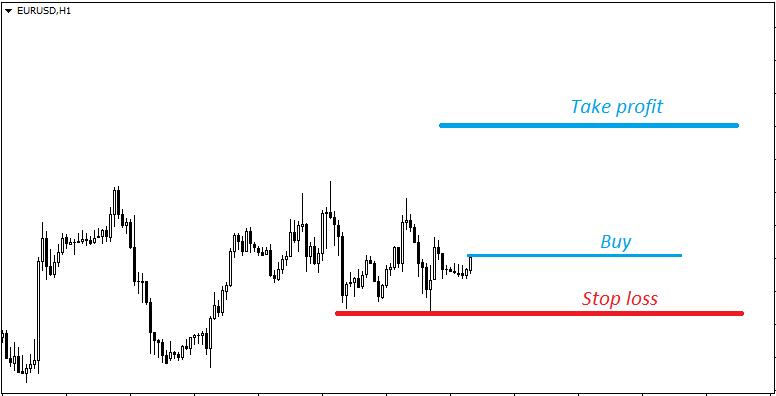
Position sizing is the input. Risk management is the framework that gives it meaning. The two-percent rule — risking no more than two percent of account equity on any single trade — has been around for decades for a reason. It allows for a long string of losses without catastrophic damage. Twenty consecutive losing trades at two percent each leaves an account at roughly 67 percent of its starting value. Painful, but recoverable. The same losing streak at ten percent per trade ends the account.
Stop-losses are the mechanical enforcement of that framework. Beginners often place them based on what feels tolerable rather than where the trade thesis is invalidated. A stop sitting just below the entry, set there because a larger loss feels uncomfortable, will be hit by routine noise. The thesis was never given room to play out.
There is also the matter of moving stops. Widening a stop as price approaches it is not risk management. It is the abandonment of risk management in real time, usually accompanied by the hope that the market will turn. It rarely does in time.
Slippage, gaps, and weekend risk deserve mention too. Stops are not guarantees.
Letting emotions override the trading plan
The plan exists for the moments when execution is hardest. That is the entire point of writing it down. A trader sitting in front of a losing position at 2am does not need inspiration. They need a rule they wrote in calmer conditions, and the discipline to follow it.
Two patterns recur. The first is revenge trading — entering a second position immediately after a loss, usually larger, to recover what just went. The second is letting winners turn into losers because closing at target felt premature when momentum looked strong. Both stem from the same source: the trade is being managed by what the account balance is doing, not by what the chart is doing.
Research from broker-published trader analytics has consistently shown that retail accounts win on more than half of their trades, on average, yet still lose money overall. The reason is asymmetry. Average wins are smaller than average losses, because winners get cut early and losers get held. Emotion drives that asymmetry, not analysis.
Journaling helps. So does pre-defining the maximum number of trades per day. Removing discretion from the moments that need it least is usually wiser than trusting it.
Ignoring macroeconomic context and scheduled news events
Currencies move on interest rate expectations, inflation prints, employment data, and central bank communication. A trader who ignores those inputs is reading half the page. Technical setups do not exist in a vacuum — they unfold against a backdrop of monetary policy and capital flows.
Take the most reliably market-moving releases: US non-farm payrolls on the first Friday of each month, CPI prints, and FOMC rate decisions. EUR/USD can move 80 to 150 pips within minutes of these events. A position carried into that window without awareness is exposed to a binary outcome unrelated to the original setup. Spreads widen. Slippage increases. Stops can be skipped entirely.
This is one of the more underappreciated mistakes among technically-oriented beginners. The chart is treated as the whole story. It is not. ECB and Federal Reserve rate paths drove the largest currency moves of the past several years, and traders who followed only price action found themselves repeatedly on the wrong side of policy shifts they could have anticipated.
An economic calendar costs nothing. Forex Factory and Investing.com publish them. Checking one before placing a trade takes under a minute.
Overtrading and chasing the market
There is a quiet assumption among newer traders that more activity produces more results. The opposite is closer to the truth. Each trade carries a cost — spread, commission, swap, and the cognitive load of managing the position. Doubling the number of trades in a session does not double the expected return. It doubles the friction.
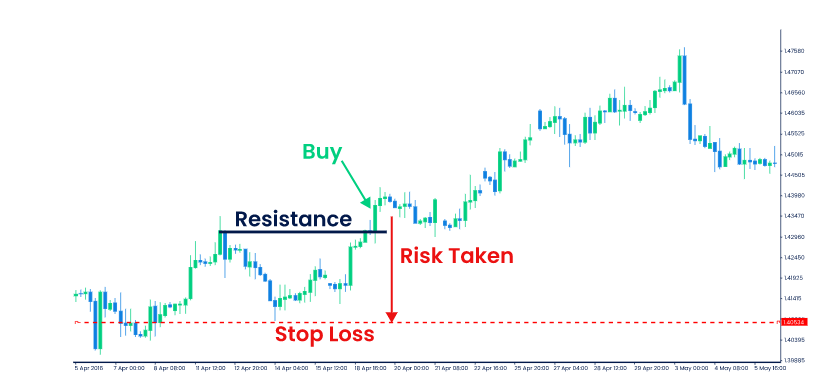
Overtrading typically takes two forms. The first is forcing setups when none exist, often during quiet sessions where ranges are tight and edges are thin. The Asian session on a major pair without scheduled news is a common graveyard. The second is chasing — entering after a move has already extended, because watching it happen without participating felt worse than the risk of a poor entry.
Both share a common driver: the need to be doing something. Markets do not reward activity. They reward selectivity. A trader who takes three high-quality setups a week will, over time, generally outperform one who takes fifteen mediocre ones, even if the win rates look similar on paper. The difference is in the size of the average winner versus the average loser, and in the cost stack.
Sit out more sessions. The market will be there tomorrow.
Failing to keep a trading journal and review performance
Without a record, every trade is the first trade. Patterns cannot be identified. Mistakes cannot be corrected, because they cannot even be located. A journal is the mechanism by which a trader becomes accountable to their own past decisions.
The minimum useful journal captures entry and exit prices, position size, the reason for entry, the reason for exit, and the result in pips and currency. More developed journals add screenshots, market context, emotional state, and adherence to the plan. Tools like Myfxbook and TradingView allow much of this to be automated through broker integration.
What the data tends to reveal is uncomfortable. Most losing traders are losing in concentrated ways — a particular pair, a particular session, a particular setup that feels right but produces consistent drawdown. Without the journal, that pattern stays invisible. With it, the fix is often as simple as removing one category of trade from the rotation.
Review weekly. Look for the trades that broke the plan, not just the ones that lost money. A losing trade taken correctly is part of the system. A winning trade taken outside the rules is a future problem.