How to become a full-time Forex trader
Most retail Forex traders lose money. Brokerage disclosures filed under regulatory requirements have shown for years that somewhere between 65 and 80 percent of retail accounts close at a loss in any given quarter. That is the starting point for any honest conversation about going full-time.
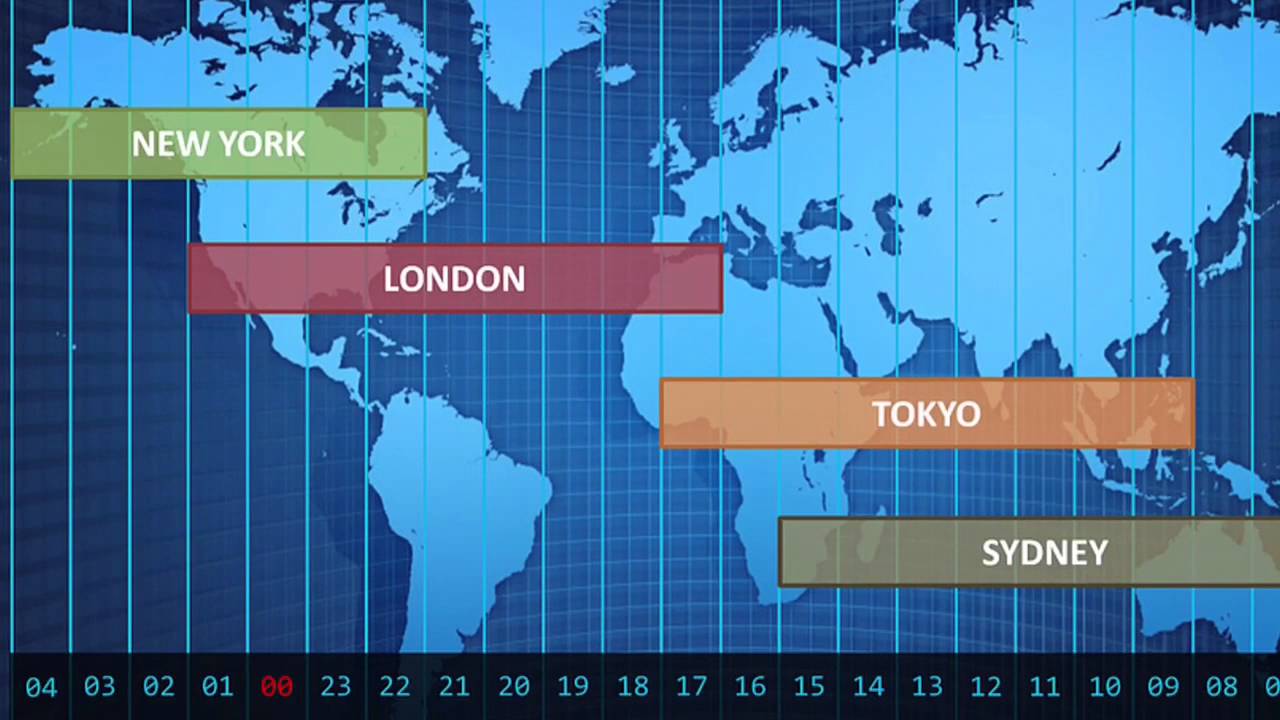
The appeal is obvious. A market that trades roughly $7.5 trillion a day, runs across five sessions, and never asks for a CV. No commute, no manager, no quarterly reviews. But the same conditions that make Forex accessible also make it unforgiving. Leverage cuts both ways. Liquidity attracts professional flow that retail participants are competing against, often without realising it.
Going full-time means trading is the income. Not a supplement, not a side project. Rent, groceries, health cover, tax — all of it has to come from a P&L curve that does not pay a salary on the first of the month.
That shift changes how a strategy must be built, how capital must be sized, and how losses must be absorbed. Most of what follows is about preparing for that change before making it.
Building the knowledge foundation before going full-time
Skipping the fundamentals is the most common mistake, and it tends to trip up even experienced traders moving across asset classes. Equities and crypto do not prepare a person for how currency pairs actually behave.
Start with the mechanics. What a pip is, how spreads work, why EUR/USD moves differently from USD/JPY at the Tokyo open, how rollover interest is calculated on a position held overnight. None of this is glamorous. All of it is necessary.
Then macroeconomics. Currency prices are driven by interest rate differentials, capital flows, trade balances, and central bank policy. A trader who cannot read a Federal Reserve statement, or who does not know what an ECB deposit facility rate change implies for EUR crosses, is guessing.
Charting and technical analysis come next. Support and resistance, moving averages, momentum indicators, candlestick patterns. These tools are widely documented across platforms like MetaTrader and TradingView, and the documentation is free.
A reasonable benchmark before risking serious capital: six to twelve months of structured study combined with a demo account. Faster than that, and the gaps tend to surface later, usually at the worst time.
Developing and validating a profitable trading strategy
A strategy is not a setup. A setup is one trade idea. A strategy is the full set of rules covering which pairs to trade, what conditions trigger entry, where stops go, how positions are sized, when to exit, and what to do when none of those rules apply.
The validation process matters more than the strategy itself. Backtesting on historical data — at least two to three years across varied market conditions — establishes whether the edge has ever existed. Forward testing on a demo account, ideally for three to six months, establishes whether the trader can execute it in real time without modification. Most cannot, at first.
Let's say a strategy shows a 55 percent win rate with a 1.5:1 reward-to-risk ratio in backtesting. On paper, that is profitable. In live execution, slippage, missed entries, and emotional override often shave several percentage points off the win rate. Plan for that gap.
Tools like Myfxbook and Forex Factory's calendar are useful for tracking performance and filtering trades around high-impact news. Whatever the approach — trend following, range trading, breakout, carry — the rules have to be written down. If they cannot be written down, they cannot be tested.
Capital requirements and income expectations
The maths here is where ambition usually meets arithmetic. A trader who needs $5,000 a month in net income, and who realistically expects to generate 3 to 5 percent monthly returns on a strong year, requires an account between roughly $100,000 and $170,000. That assumes consistency that few traders achieve in their first three years.
Anything less, and the position sizing required to hit the income target forces excessive risk per trade. Risk 5 percent per trade on a $10,000 account to chase $5,000 a month, and the account is statistically likely to be drawn down to zero within months. Variance does the rest.
Reasonable monthly returns for skilled retail traders cluster between 2 and 6 percent on average, with significant month-to-month variation. Professional fund managers running currency strategies often target lower annualised returns than retail traders assume, which is informative.
A separate cash reserve covering twelve months of living expenses sits outside the trading account. That reserve is not capital. It is the buffer that prevents bad weeks from becoming forced liquidations driven by rent rather than by the market. Treat it as untouchable.
Risk management as the core of sustainable trading
Strategy gets the attention. Risk management determines survival.
The standard rule, repeated across professional desks, is to risk no more than 1 to 2 percent of account equity on any single trade. On a $50,000 account, that is $500 to $1,000 maximum exposure per position. Stop-loss placement, position size, and pair volatility all feed into that calculation, and the calculation happens before entry. Not after.
Correlation is often misunderstood. A long EUR/USD position and a short USD/CHF position are not two independent trades. They are largely the same bet on dollar weakness, and sizing them as separate exposures doubles the actual risk. Tools available on OANDA and Forex.com platforms display correlation matrices that make this visible.
Drawdown tolerance is the other piece. A 20 percent drawdown requires a 25 percent gain to recover. A 50 percent drawdown requires a 100 percent gain. The arithmetic punishes deep losses disproportionately, which is why protecting capital ranks above growing it.
Daily loss limits, weekly loss limits, and a hard rule to stop trading after a defined string of losses are not signs of weakness. They are the structure that keeps a career intact long enough for the edge to compound.
Treating trading as a business: routine, records, and psychology
Full-time traders who last tend to share a structure that looks closer to a small business than a hobby. Set hours. A pre-market routine that covers economic releases, overnight price action, and the day's plan. A post-session review.
The trading journal is non-negotiable. Every trade logged with entry, exit, size, reasoning, screenshot, and outcome. Patterns emerge from journals that no amount of theory reveals — a trader who consistently loses on Mondays, or who performs badly after a winning streak, only learns this from data they collected on themselves.
Psychological pressure escalates when the income is real. A losing week with rent due hits differently than a losing week as a part-timer with a salary. Many traders describe the second year as harder than the first, because the novelty has worn off and the variance has not.
Physical and mental conditioning matter more than is generally acknowledged. Sleep, exercise, time away from screens. Decision quality degrades quickly under fatigue, and the market does not adjust for tired operators.
Tax obligations vary by jurisdiction. Engaging an accountant familiar with trading income early avoids unpleasant surprises later.
Transitioning from part-time to full-time trading
Going full-time should be a confirmation, not a leap. The transition begins with sustained part-time profitability — typically twelve to eighteen months of consistent monthly returns on a live account, not a demo. Demo trading does not replicate the psychological weight of real money, and that gap is where most aspiring traders discover their actual skill level.
A staged approach reduces the risk of a premature exit from employment. Build the trading account alongside the day job. Reach the point where part-time trading income matches or exceeds 50 percent of salary, sustained over six months. Then reassess.
The cash reserve mentioned earlier comes into play here. Twelve months minimum, kept entirely separate from trading capital. Health insurance, if the day job provided it, becomes a personal expense overnight. Self-employment tax structures, retirement contributions, and irregular income flows all need to be planned before the resignation letter, not after.
A practical option many overlook: reducing employment to part-time before going fully independent. The hybrid period exposes the realities of solo work — the isolation, the absence of structure imposed by others — while a partial salary still covers fixed costs.
Is full-time forex trading right for you?
The honest answer for most people is no. That is not pessimism. It is what the data shows, repeated across regulatory disclosures, broker reports, and academic studies of retail trading outcomes for over a decade.
For a small percentage, it works. Those traders tend to share a few traits: they treated learning as a multi-year process, they protected capital obsessively, they kept records, and they entered full-time only after demonstrating sustained profitability with their own money. They also tended to have financial buffers that allowed bad months to remain bad months rather than crises.
The decision is not really about whether Forex can produce a living. It can. The decision is whether the candidate has the temperament for variance, the patience for slow capital growth, the discipline to follow rules during losing streaks, and the financial position to absorb the time required to develop genuine skill.
Anyone weighing this seriously should sit with the maths in the capital requirements section, the drawdown arithmetic in the risk section, and ask whether the answer still holds.